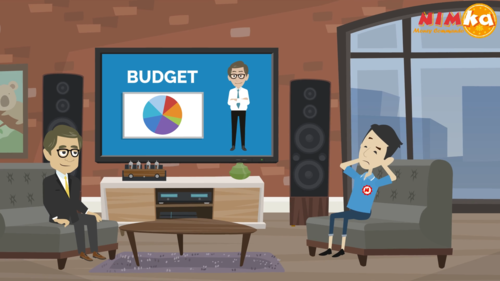
- Classroom-ready animated videos for ages 10–18
- AYO Stories (Audio–Visual–Outcome), each with distinct characters and situations
- One financial concept per video
- Real-life money situations children recognise and relate to
- Jargon-free, age-appropriate language
- Ethics and values embedded naturally within stories
- Teacher-friendly and easy to integrate into classrooms
- Assessment-backed learning through MCQs and reflection
- Multi-language animated videos available in English, Hindi, Marathi & Tamil
Frequently
Asked
Questions

What is unique about the NIMka Value of Money program?
Many children behave as if “money grows on trees”, not because they are careless, but because they haven’t yet connected work, earning, and spending. NIMka delivers this learning through short, story-based animated videos that simplify basic economics and money concepts to a child’s level, using everyday examples to build real money sense.
How can it help the student?
Money quietly shapes daily life, choices, and priorities. Through engaging audio-visual stories, NIMka helps students understand the “mechanics of money” in simple terms and build habits like thoughtful spending, saving, and planning, so they grow up more confident and responsible with money.
Isn’t it too early to learn about money?
Not at all. Around age 10 onwards, children begin forming lasting habits and can grasp practical money ideas. Age-appropriate animated stories make it easy to introduce these concepts early, giving students a head-start well before their earning years begin.
Won’t the usage of these concepts start much later?
The best habits start small. If a child learns to think before buying a Rs 10 chocolate today, the same thinking carries forward when they are older and choosing a Rs 10,000 item (say a phone, furniture, or a course). When such ideas are learned visually and repeatedly through stories, good judgement forms early, instead of through expensive mistakes later.
Will they not forget these learnings by the time they are 22?
Habits learned young tend to stick. Think of cycling: someone who learns at 10 usually carries that skill for life. Story-led video learning works the same way. When students repeatedly see and relate to simple principles, they become second nature.
Money is experienced. We never learnt it formally.
True. Most of us learned money through trial and error. NIMka replaces that trial-and-error learning with structured, story-based video learning, so children don’t have to repeat the same expensive learning curve. Values, fairness, and ethics form the foundation of every story.
Money is a complex topic. Is it wise to expose children to it so early?
That is exactly why NIMka works. We de-jargonise money and teach only what is age-appropriate, using animated stories, simple language, and real-life contexts. Ethics is treated as the bedrock: money sense without values is incomplete.
Is there an exam or test after completion of the program?
Yes. After completing the video modules, NIMka includes an MCQ-based assessment to reinforce learning and check understanding..